
Michael Daugherty, composer
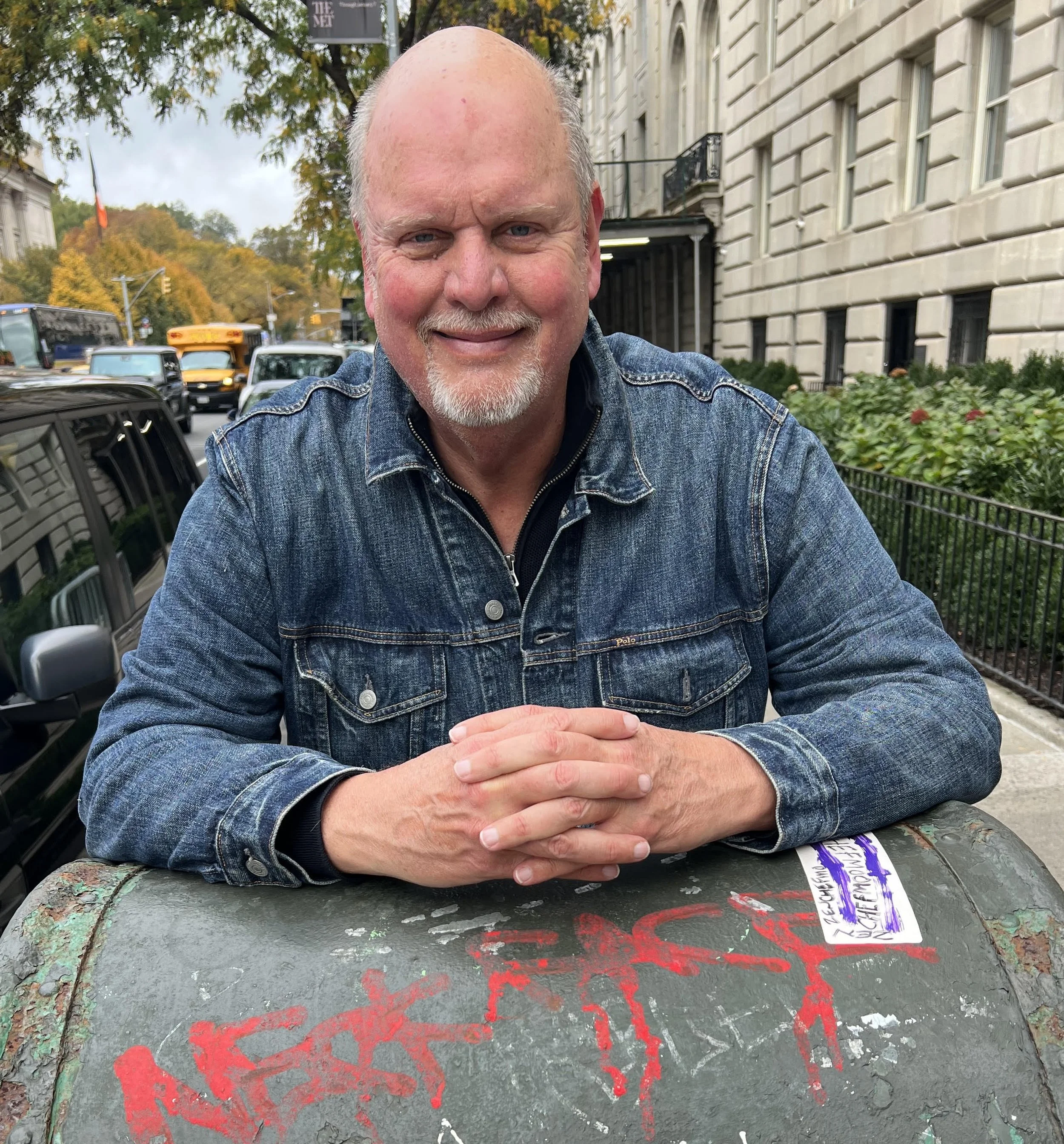
GRAMMY Award-winning composer Michael Daugherty first came to international attention when his Metropolis Symphony was performed by the Baltimore Symphony Orchestra, conducted by David Zinman, at Carnegie Hall in 1994 and subsequently recorded by Decca/Argo. Since then, Daugherty’s music has entered orchestral, band and chamber music repertoire and made him, according to the League of American Orchestras, one of the ten most-performed American composers of concert music today. His music has received six GRAMMY Awards, including Best Contemporary Classical Composition in 2010 for Deus ex Machina for piano and orchestra and in 2016 for Tales of Hemingway for cello and orchestra.
Born in 1954 in Cedar Rapids, Iowa, Daugherty is the oldest of five brothers, all professional musicians. They grew up in a musical household, with a father who played the drums in dance bands and a mother who sang in musical theater productions. As a young man, Daugherty studied composition with many of the preeminent composers of the twentieth century including Jacob Druckman, Earle Brown, Bernard Rands and Roger Reynolds at Yale University (1980-82), Betsy Jolas at the Paris Conservatory and Pierre Boulez at IRCAM in Paris (1979-80), and György Ligeti in Hamburg (1982-84). From 1980-82, Daugherty was also an assistant to jazz arranger Gil Evans in New York.
After teaching from 1986 to 1991 at the Oberlin Conservatory of Music in Oberlin, Ohio, Daugherty became Professor of Composition at the University of Michigan School of Music, Theatre and Dance in Ann Arbor, Michigan, where he is a mentor to many of today’s most talented young composers. Daugherty is also a frequent guest of professional orchestras, festivals, universities and conservatories around the world. Daugherty’s music is published by Peermusic Classical/Faber Music, Boosey & Hawkes and since 2010 by Michael Daugherty Music
